

Artificial intelligence has become a core driver of workplace automation, productivity, and decision-making. But with this rapid adoption comes a growing list of ethical questions: Who is accountable for AI-driven decisions? Is employee surveillance going too far? What happens when algorithms exhibit bias? And how will the future workforce adapt?
This article breaks down the critical ethical implications of AI at work, supported by practical examples, real-world use cases, expert insights, and actionable recommendations for businesses and employees.
Why AI Ethics in the Workplace Matters
AI is no longer a futuristic idea; it powers hiring platforms, monitors employee performance, automates tasks, and even helps set salaries. Ethical implementation is essential because:
- AI influences decisions that affect people’s livelihoods.
- Unchecked automation can create unfair or biased outcomes.
- Data-driven tools raise new privacy and surveillance concerns.
- Poor governance can lead to legal and reputational risks.
1. Job Displacement & Workforce Transition
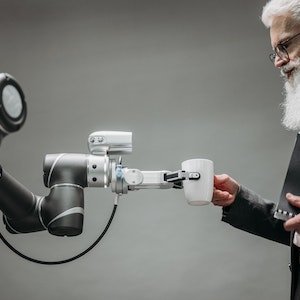
Automation and AI-driven systems are replacing repetitive or manual roles across industries.
Examples of AI-driven job impact:
- Manufacturing: Robots replacing assembly line operators.
- Customer support: AI chatbots handling first-tier support.
- Retail: Automated checkout replacing cashiers.
- Banking: AI fraud systems replacing manual review teams.
Ethical Concerns
- Large-scale unemployment or forced reskilling.
- Unequal impact across socio-economic groups.
- Organizations prioritizing cost-cutting over human well-being.
Solutions
- Implement reskilling and upskilling programs.
- Create hybrid human-AI workflows instead of full replacement.
- Offer transition support for affected employees.
2. AI Bias & Discrimination in Hiring
AI tools are widely used for recruitment — resume screening, assessments, and even video interviews.
Problem
Training data often reflects societal biases, leading to discriminatory decisions.
Examples
- AI rejecting female applicants for engineering roles.
- Biased language models scoring certain ethnic names lower.
- Facial analysis systems misinterpreting expressions of non-white candidates.
Ethical Best Practices
- Use diverse training datasets.
- Regularly audit AI systems for bias.
- Require human oversight in final hiring decisions.
3. Employee Privacy & Surveillance
AI-powered monitoring systems can track keystrokes, emails, eye movement, GPS, and productivity metrics.
Ethical Issues
- Violation of employee privacy.
- Psychological stress due to constant monitoring.
- Use of employee data without consent.
Acceptable vs. Unacceptable Monitoring
| Acceptable Use | Unethical or Questionable Use |
|---|---|
| Monitoring company-owned devices for security | Tracking employee personal devices |
| Measuring productivity for project optimization | Always-on surveillance or webcam monitoring |
| Anonymized performance analytics | Collecting sensitive or biometric data without consent |
Guidelines
- Be transparent about monitoring practices.
- Apply minimal and necessary data collection.
- Allow employees to opt out where possible.
4. Accountability & Transparency in AI Decisions
Who is responsible when an AI system makes a harmful or incorrect decision?
Challenges
- AI decisions are often opaque (“black box”).
- Managers may rely too heavily on AI outputs.
- Employees lack visibility into decisions affecting them.
Ethical Recommendations
- Require explainability for all major AI-driven decisions.
- Maintain human-in-the-loop governance.
- Document AI model decisions and updates.
5. Safety, Security & Data Protection
AI systems are vulnerable to data breaches, adversarial attacks, and misuse.
Ethical Risks
- Leaked employee data.
- Manipulated training datasets.
- Unauthorized access to sensitive workplace information.
Solutions
- Encrypt data flows end-to-end.
- Implement strict access controls.
- Conduct regular security audits.
6. Fair Compensation & Productivity Ethics
AI allows businesses to set real-time performance targets or adjust pay.
Concerns
- AI-driven performance pressure.
- Dynamic wage adjustments creating unequal compensation.
- AI misinterpreting human context.
Good Practices
- Blend human and AI evaluation.
- Avoid AI-only performance scoring.
- Create ethical review committees.
7. The Future of AI Governance in the Workplace
Governments and international bodies are creating frameworks for ethical AI use.
Key Principles for Responsible Workplace AI
- Transparency
- Fairness
- Privacy protection
- Human oversight
- Non-discrimination
- Accountability
Pros & Cons of Using AI in the Workplace
Pros
- Increased efficiency and productivity
- Data-driven decisions
- Reduced operational costs
- Enhanced employee support tools
- Improved workplace safety
Cons
- Risk of job displacement
- Potential for AI bias
- Increased surveillance
- Lack of transparency
- Data security concerns
How Companies Can Implement Ethical AI: Step-by-Step Guide
1. Define ethical goals
Identify company-wide principles related to fairness, transparency, and accountability.
2. Conduct ethical impact assessments
Review potential risks before deploying any AI system.
3. Build human-AI oversight systems
Ensure important decisions include human review.
4. Educate employees
Train staff on AI usage, risks, and data handling.
5. Monitor and audit regularly
Continuously test AI models for bias, accuracy, and fairness.
6. Create a cross-functional AI ethics board
Include HR, legal, engineering, and leadership teams.
Internal Linking Suggestions for CodewitAI.com
You can internally link this article to:
- AI governance and regulation guides
- Workplace automation tools
- AI job trends and future of work
- Ethical AI development tutorials
- Machine learning transparency articles
External Authoritative Reference Suggestions
- OECD AI Principles
- IEEE Ethically Aligned Design
- NIST AI Risk Management Framework
- World Economic Forum AI Governance Reports
- EU AI Act documentation
Conclusion
AI is reshaping the workplace faster than many organizations can adapt. While the benefits are enormous—efficiency, automation, accuracy—the ethical implications cannot be ignored. Businesses must proactively address bias, privacy concerns, accountability gaps, and workforce displacement to build a responsible AI-first workplace.
Ethical AI is not only a compliance requirement; it’s a competitive advantage that builds trust, enhances productivity, and improves long-term sustainability.
FAQs (People Also Ask Optimized)
1. What are the biggest ethical concerns of AI in the workplace?
The main concerns include bias in decision-making, job displacement, privacy violations, surveillance practices, and accountability gaps in AI-driven systems.
2. How does AI affect employee privacy?
AI systems can track emails, keystrokes, location, and biometric data, raising privacy issues if used without proper consent or transparency.
3. Can AI replace human workers?
AI can replace repetitive or manual tasks, but most workplaces will adopt hybrid human-AI workflows rather than full automation.
4. How can businesses ensure ethical AI use?
Companies should enforce transparency, human oversight, ethical audits, diverse datasets, and strong data protection policies.
5. Is AI bias a real issue?
Yes. AI models often reflect the biases present in their training data, which can lead to unfair hiring decisions or performance evaluations.


Leave a Reply